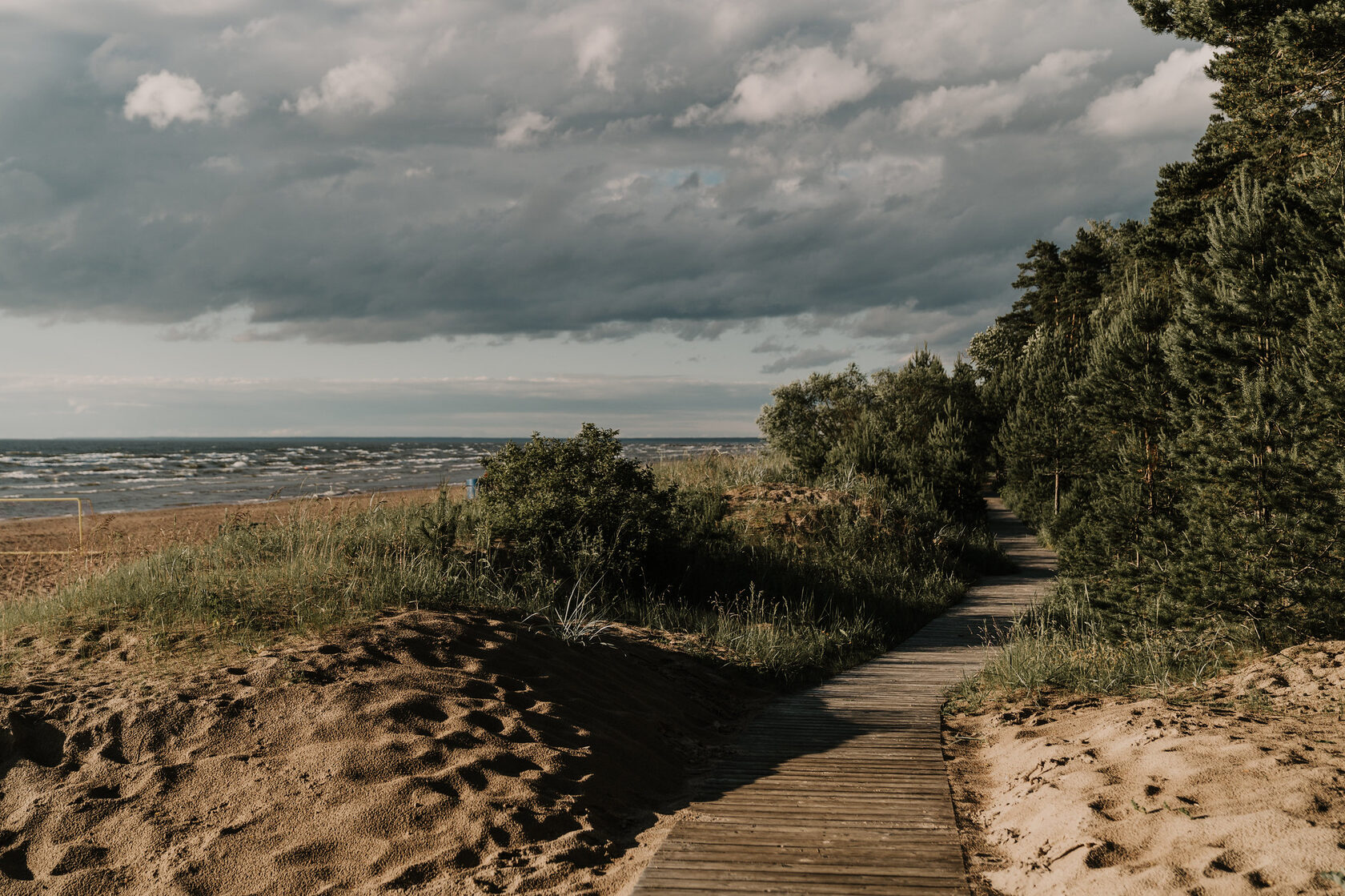
The pandemic that began in 2020 and Russia’s subsequent war of aggression against Ukraine have significantly affected Narva-Jõesuu’s position. As recently as 2019, the resort town had hoped to benefit from Narva’s success had it been awarded the title of European Capital of Culture. After all, what visitor arriving in Narva would overlook a picturesque seaside resort nearby, rich in historical heritage?
Unfortunately, events unfolded differently. The once-intense flow of tourists from the eastern border diminished dramatically, leaving hotels and sandy beaches unusually quiet for a time. It became necessary to identify new resources and hidden opportunities to ensure that one of Estonia’s most beautiful locations would not fade away or turn from “the place where Europe begins” into an abandoned “backyard of Europe.”
Initially, domestic tourism revived, and the Estonian language was heard increasingly often in Narva-Jõesuu. However, the number of European visitors declined sharply. From 2023 onward, a new category of visitors began to arrive — politically curious tourists drawn by the long international queues and recurring incidents at the border crossing, as well as by concerts organised by Russia for Narva residents on the opposite bank in Ivangorod. For Narva-Jõesuu, however, this phenomenon had only indirect impact, as some visitors would travel on to the quiet resort town after events in Narva to enjoy the sea air and tranquillity.
Unfortunately, events unfolded differently. The once-intense flow of tourists from the eastern border diminished dramatically, leaving hotels and sandy beaches unusually quiet for a time. It became necessary to identify new resources and hidden opportunities to ensure that one of Estonia’s most beautiful locations would not fade away or turn from “the place where Europe begins” into an abandoned “backyard of Europe.”
Initially, domestic tourism revived, and the Estonian language was heard increasingly often in Narva-Jõesuu. However, the number of European visitors declined sharply. From 2023 onward, a new category of visitors began to arrive — politically curious tourists drawn by the long international queues and recurring incidents at the border crossing, as well as by concerts organised by Russia for Narva residents on the opposite bank in Ivangorod. For Narva-Jõesuu, however, this phenomenon had only indirect impact, as some visitors would travel on to the quiet resort town after events in Narva to enjoy the sea air and tranquillity.
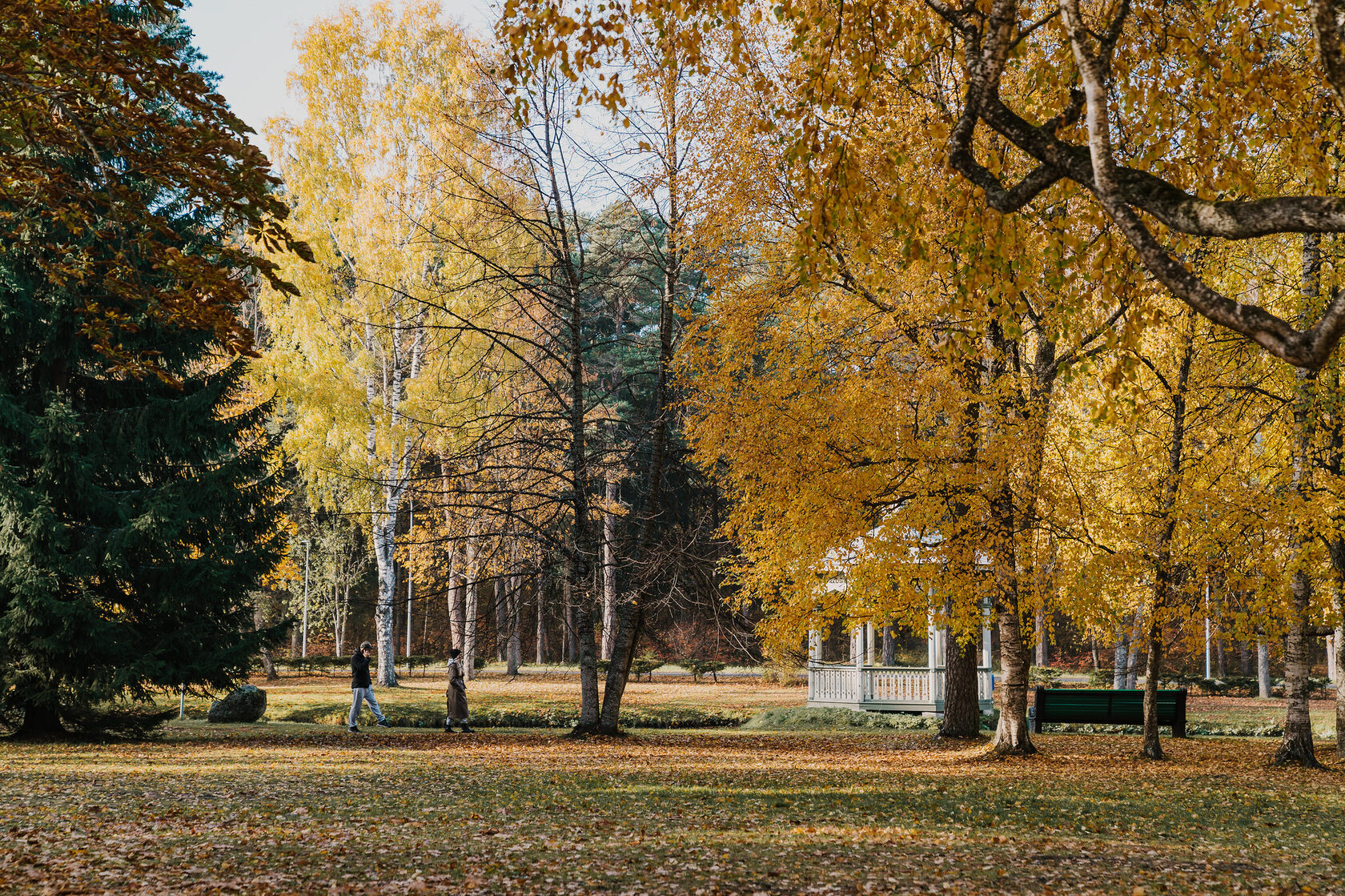
Narva-Jõesuu Light park. Photo: Anna Markova
An important factor that may breathe new life into Narva-Jõesuu is climate change. Rising temperatures are turning life in Mediterranean resorts into a real challenge, while travelling to more distant holiday destinations may become financially out of reach due to economic uncertainty. In the context of these changes, Narva-Jõesuu could emerge as an attractive destination for climate tourism.
At the same time, the European visitor is more demanding than the former Russian market and will not be satisfied solely with Estonia’s longest sandy beach, its pine-fringed shoreline, spa services and retro architecture — evocative of a glorious past, yet insufficient as a foundation for the resort’s long-term sustainability. Today’s traveller, both international and domestic, values not only tranquillity and seclusion but also a thoughtfully designed holiday programme that provides renewed energy, fosters a positive outlook on life and supports inner balance. In this respect, Narva-Jõesuu has taken its first steps toward shaping a new, contemporary model of resort development.
There is also an intriguing geographical fact: the point where the Narva River flows into the Gulf of Finland is the easternmost point of the European Union’s coastline. For many years, however, this location has been associated locally with the remains of a half-ruined breakwater and hazardous currents. This year, the City Government succeeded in securing funding for the construction of a new breakwater, thereby addressing the long-standing problem.
This is not merely a technical solution. Just as Europe’s westernmost point, Cabo da Roca in Portugal, with its lighthouse and commemorative plaque bearing lines by the poet Luís de Camões — where visitors can take photographs and obtain a certificate confirming their visit to the westernmost edge of Europe — has become a symbolic destination, the former pile of concrete blocks and decaying piles at Narva-Jõesuu is now being transformed into an elegant natural-stone-supported breakwater.
The renewal has already attracted attention in Portugal. Who knows — perhaps we may soon witness a sailing regatta titled “Sea Route from the Atlantic to the Baltic” or a maritime journey branded “The European Union from Edge to Edge.” Portuguese partners have already expressed interest in joint initiatives. The Narva-Jõesuu Lighthouse, offering panoramic views, will gain a worthy and romantic landscape feature alongside it — one that may well become a compelling attraction for travellers.
At the same time, the European visitor is more demanding than the former Russian market and will not be satisfied solely with Estonia’s longest sandy beach, its pine-fringed shoreline, spa services and retro architecture — evocative of a glorious past, yet insufficient as a foundation for the resort’s long-term sustainability. Today’s traveller, both international and domestic, values not only tranquillity and seclusion but also a thoughtfully designed holiday programme that provides renewed energy, fosters a positive outlook on life and supports inner balance. In this respect, Narva-Jõesuu has taken its first steps toward shaping a new, contemporary model of resort development.
There is also an intriguing geographical fact: the point where the Narva River flows into the Gulf of Finland is the easternmost point of the European Union’s coastline. For many years, however, this location has been associated locally with the remains of a half-ruined breakwater and hazardous currents. This year, the City Government succeeded in securing funding for the construction of a new breakwater, thereby addressing the long-standing problem.
This is not merely a technical solution. Just as Europe’s westernmost point, Cabo da Roca in Portugal, with its lighthouse and commemorative plaque bearing lines by the poet Luís de Camões — where visitors can take photographs and obtain a certificate confirming their visit to the westernmost edge of Europe — has become a symbolic destination, the former pile of concrete blocks and decaying piles at Narva-Jõesuu is now being transformed into an elegant natural-stone-supported breakwater.
The renewal has already attracted attention in Portugal. Who knows — perhaps we may soon witness a sailing regatta titled “Sea Route from the Atlantic to the Baltic” or a maritime journey branded “The European Union from Edge to Edge.” Portuguese partners have already expressed interest in joint initiatives. The Narva-Jõesuu Lighthouse, offering panoramic views, will gain a worthy and romantic landscape feature alongside it — one that may well become a compelling attraction for travellers.
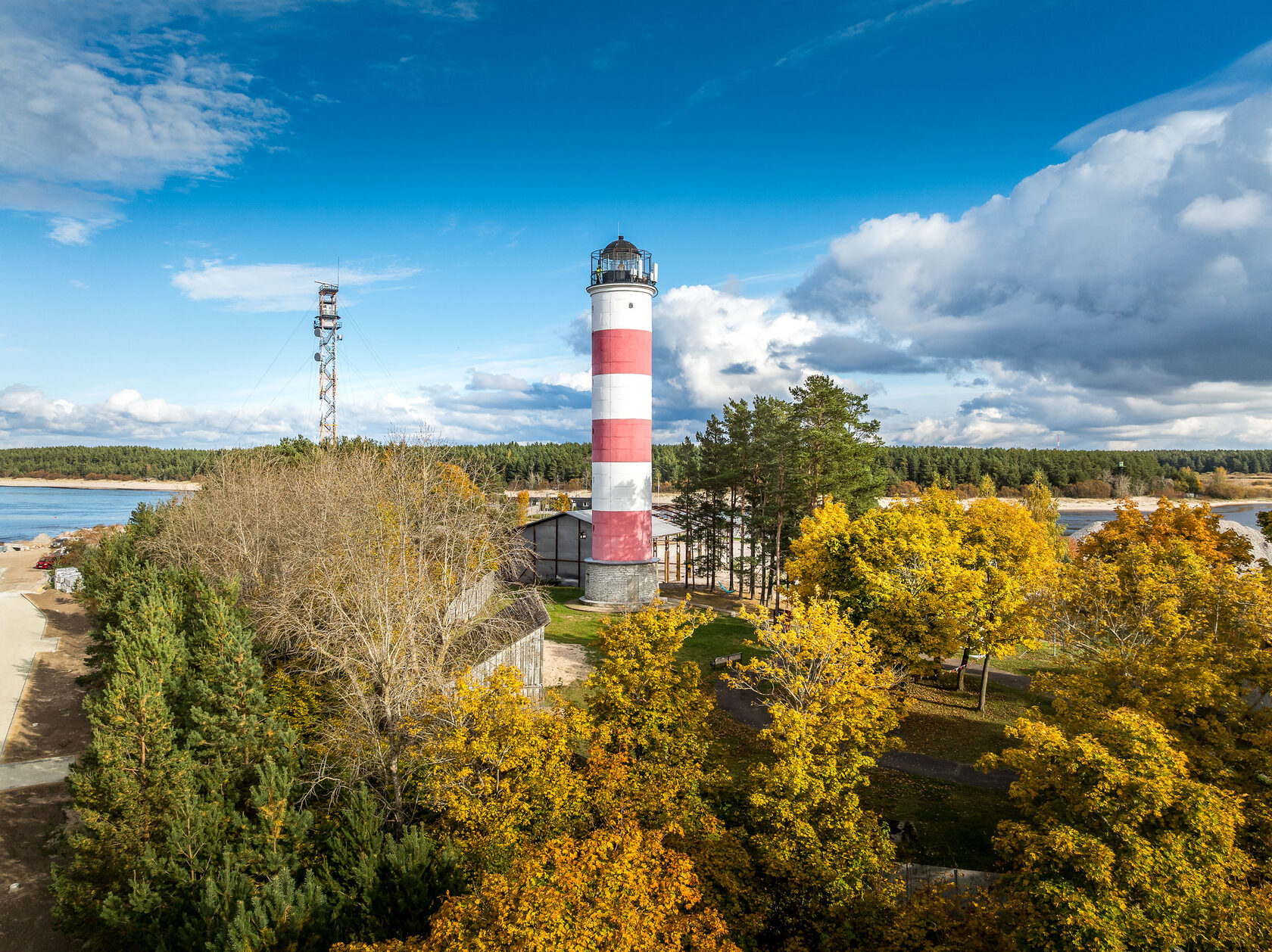
The Narva-Jõesuu Lighthouse. Photo: Arvo Juhkov
Opened to visitors last year, the Narva-Jõesuu Lighthouse, located between sandy dunes and pine forest, is already attracting thousands of visitors drawn by the view of the golden shoreline and the open sea. The picturesque hill on which the lighthouse stands is gradually becoming a gathering place for open-air film screenings, artists’ masterclasses and discussions on engaging topics.
Taking this potential into account, the owner of the adjacent territory, with support from the city and the Just Transition Fund, plans to establish a Cultural Quarter near the lighthouse, designed to host concerts, music festivals and sporting events. Organising events of European calibre requires a professional stage, modern technical equipment, well-designed backstage facilities for performers and comfortable conditions for audiences. Who knows — perhaps next summer, on a warm July evening, we will find ourselves seated in a stylish amphitheatre enjoying an intellectually refined production by Alexander Ekman or operatic fantasies by Max Emanuel Cencic.
Narva-Jõesuu’s development strategy is not limited to creating new attractions aimed at mass tourism. The town is consistently implementing the concept of a wellness resort, which differs from traditional spa resorts. Rather than offering solely relaxing treatments, a wellness resort creates a comprehensive and multifaceted health environment focused on improving a person’s physical, psycho-emotional and spiritual condition. The concept of wellness describes health not merely as the absence of illness, but as overall quality of life — supporting self-realisation and harmony both with the surrounding world and with oneself.
Wellness can therefore be understood both as a strategy for physical restoration and as a life philosophy encompassing all spheres of wellbeing — physical, social, mental and intellectual. A healthy lifestyle is not simply about enhancing quality of life or making it more enjoyable; in today’s complex world, it has become essential. We are surrounded by environmental pollution, political crises, military threats and economic instability. In such a reality, caring for one’s health is no longer a luxury but a fundamental necessity of everyday life.
Taking this potential into account, the owner of the adjacent territory, with support from the city and the Just Transition Fund, plans to establish a Cultural Quarter near the lighthouse, designed to host concerts, music festivals and sporting events. Organising events of European calibre requires a professional stage, modern technical equipment, well-designed backstage facilities for performers and comfortable conditions for audiences. Who knows — perhaps next summer, on a warm July evening, we will find ourselves seated in a stylish amphitheatre enjoying an intellectually refined production by Alexander Ekman or operatic fantasies by Max Emanuel Cencic.
Narva-Jõesuu’s development strategy is not limited to creating new attractions aimed at mass tourism. The town is consistently implementing the concept of a wellness resort, which differs from traditional spa resorts. Rather than offering solely relaxing treatments, a wellness resort creates a comprehensive and multifaceted health environment focused on improving a person’s physical, psycho-emotional and spiritual condition. The concept of wellness describes health not merely as the absence of illness, but as overall quality of life — supporting self-realisation and harmony both with the surrounding world and with oneself.
Wellness can therefore be understood both as a strategy for physical restoration and as a life philosophy encompassing all spheres of wellbeing — physical, social, mental and intellectual. A healthy lifestyle is not simply about enhancing quality of life or making it more enjoyable; in today’s complex world, it has become essential. We are surrounded by environmental pollution, political crises, military threats and economic instability. In such a reality, caring for one’s health is no longer a luxury but a fundamental necessity of everyday life.
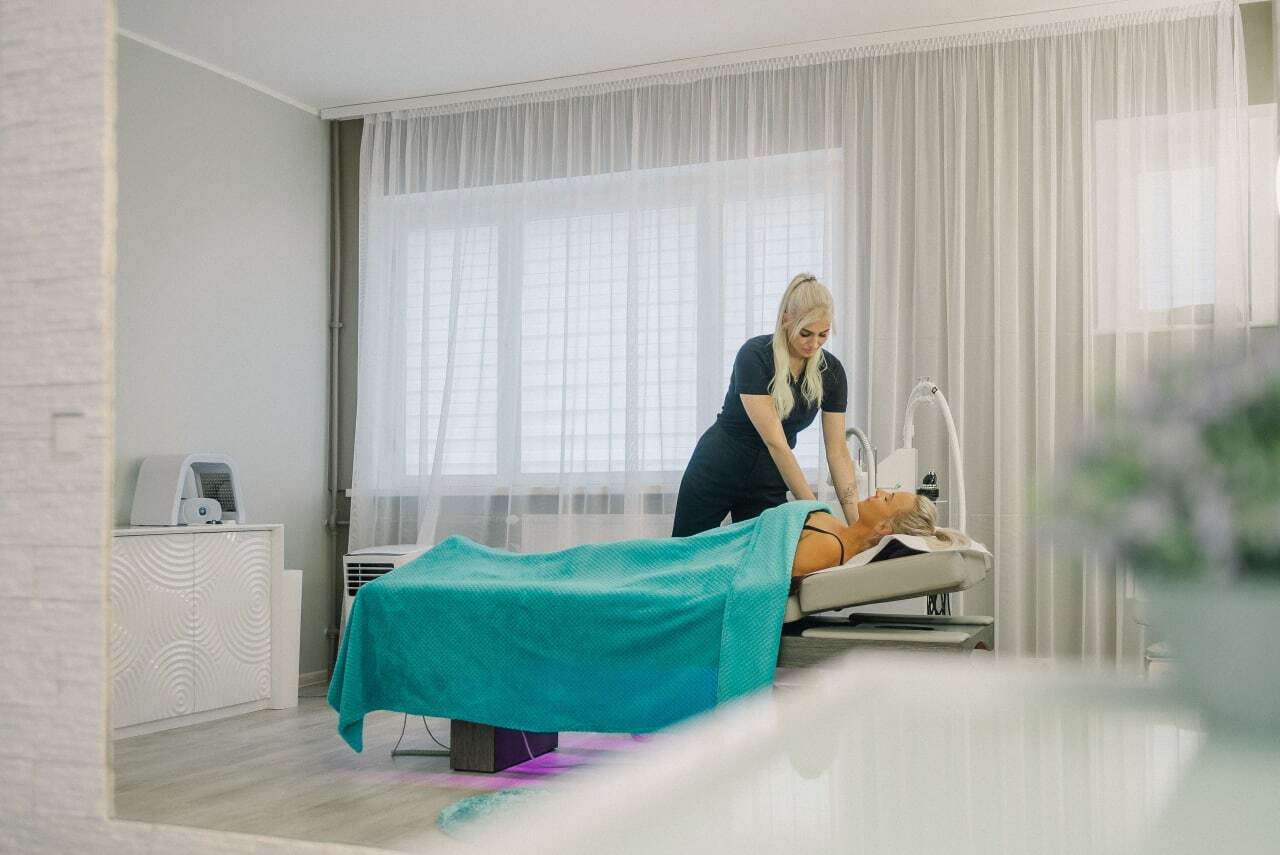
Narva-Jõesuu Medical Spa
One of the distinctive features of the Narva-Jõesuu resort is that, alongside wellness spa services — combining physical care with restorative practices — and a diverse cultural programme (concerts, festivals, competitions and more), conditions are also being created for intellectual wellbeing. This dimension is supported by meetings with psychologists, psychotherapists and psychoanalysts; yoga teachers who provide positive energy and strengthen self-confidence; guided tours exploring the resort’s rich cultural heritage; as well as art exhibitions and masterclasses with a therapeutic and inspirational effect for both participants and audiences.
The establishment of a Philosophy Club proved to be a successful initiative, attracting increasing numbers of participants not only from Narva-Jõesuu but also from Narva, Sillamäe, Kohtla-Järve and other towns. At the initiative of club members and with the support of a local creative collective, the Wisdom Trail was created — a scenic walking route along the seaside promenade offering panoramic coastal views while introducing visitors to the thoughts of philosophers, artists, poets, musicians and writers who have lived in or visited this beautiful location. Interestingly, reflections by philosophers of past centuries on the positive impact of walking on mental activity align closely with modern public health recommendations. The Wisdom Trail also inspired themes at the sand sculpture competition, such as “The Sofa of Wisdom,” “The Castle of Wisdom,” and “The Book.”
Efforts to enrich the intellectual dimension of resort life have become a visible and appealing phenomenon. This summer, the Tartu New Theatre staged its production “KAHHELDRAAL” in the former swimming pool hall of the Mereranna sanatorium to a full house. The performance is rich in philosophical subtext and layered meaning. As a result, Narva-Jõesuu’s cultural repertoire now extends beyond popular folklore and ethnographic events to include intellectually oriented programmes.
The attention devoted to developing intellectual wellbeing makes the prospect of Narva-Jõesuu evolving into a fully fledged European wellness resort both realistic and achievable.
The establishment of a Philosophy Club proved to be a successful initiative, attracting increasing numbers of participants not only from Narva-Jõesuu but also from Narva, Sillamäe, Kohtla-Järve and other towns. At the initiative of club members and with the support of a local creative collective, the Wisdom Trail was created — a scenic walking route along the seaside promenade offering panoramic coastal views while introducing visitors to the thoughts of philosophers, artists, poets, musicians and writers who have lived in or visited this beautiful location. Interestingly, reflections by philosophers of past centuries on the positive impact of walking on mental activity align closely with modern public health recommendations. The Wisdom Trail also inspired themes at the sand sculpture competition, such as “The Sofa of Wisdom,” “The Castle of Wisdom,” and “The Book.”
Efforts to enrich the intellectual dimension of resort life have become a visible and appealing phenomenon. This summer, the Tartu New Theatre staged its production “KAHHELDRAAL” in the former swimming pool hall of the Mereranna sanatorium to a full house. The performance is rich in philosophical subtext and layered meaning. As a result, Narva-Jõesuu’s cultural repertoire now extends beyond popular folklore and ethnographic events to include intellectually oriented programmes.
The attention devoted to developing intellectual wellbeing makes the prospect of Narva-Jõesuu evolving into a fully fledged European wellness resort both realistic and achievable.
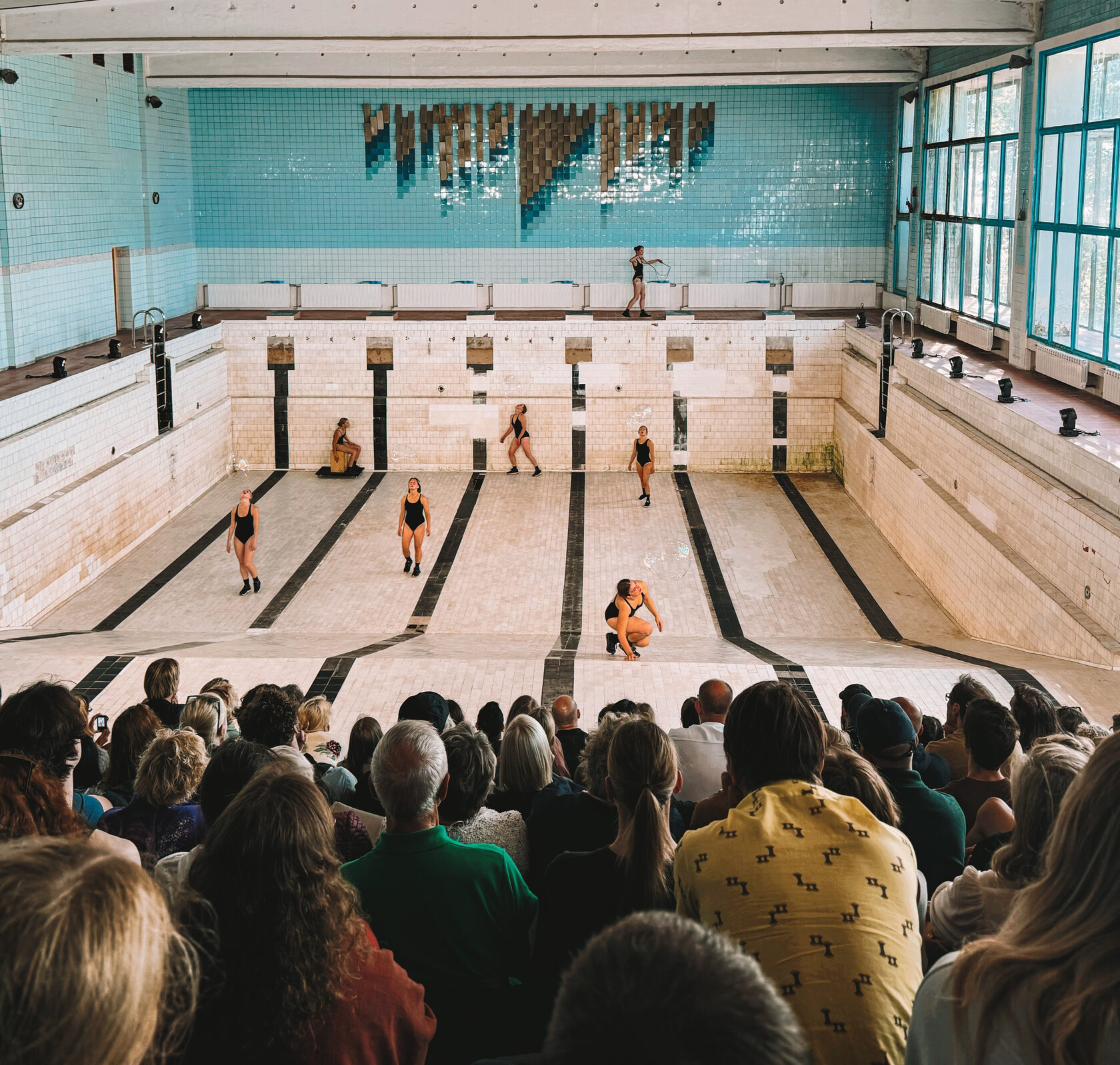
The Tartu New Theatre’s production “KAHHELDRAAL” was staged in the former swimming pool hall of the Mereranna sanatorium.
Naturally, the resort also faces challenges — among them the once-famous but now deteriorating Hungerburg Kursaal. The issue lies not so much in funding as in legislation, which prohibits the demolition of architectural heritage sites while effectively allowing them to decay gradually over time. At the same time, there is reason for optimism in the enthusiasm of local residents, who actively support and contribute to transforming the historic resort into a modern centre of wellbeing.